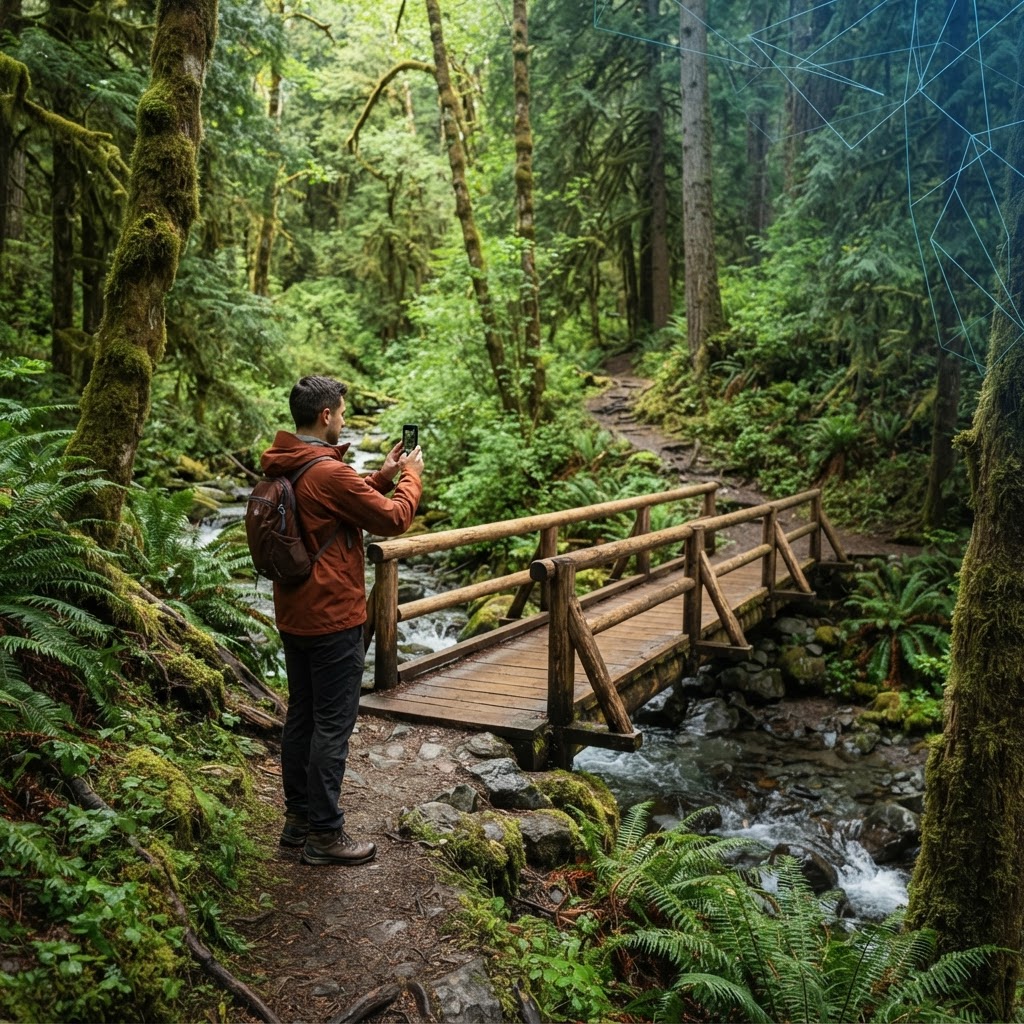
The Growing Need for Trail Safety Audits
Public interest in outdoor recreation has never been higher, leading to increased traffic on local, municipal, and private hiking trails. With this usage comes the inherent responsibility of land managers—cities, parks departments, and private land trusts—to maintain safe conditions for the public. However, many of these organizations lack the specialized manpower or internal expertise to conduct systematic, documented safety inspections.
This gap creates a significant business opportunity for an independent consultant who provides professional, repeatable trail safety and hazard audit services. By leveraging a digital-first approach to reporting, you can provide land managers with clear data, categorized risks, and prioritized maintenance tasks, helping them reduce liability and improve user safety.
How the Business Model Works
Your service focuses on systematically walking designated trails to identify hazards such as fallen trees, eroded footpaths, damaged signage, or malfunctioning trail infrastructure like boardwalks and bridges. Unlike informal volunteer checks, your service provides a structured report that land managers can use to allocate budgets and labor.
Define Your Service Tiers
- Standard Safety Audit: A seasonal check focusing on major hazards (fallen trees, deep erosion, bridge integrity).
- Comprehensive Compliance Review: A detailed audit including signage accuracy, accessibility markers, and long-term erosion risk assessment.
- Emergency Post-Event Inspection: Rapid response audits after severe weather events to clear paths for public use.
Build this in AI Form Generator
To operate this business efficiently, you need a mobile-first digital workflow that captures data on the trail. Use AI Form Generator to create a 'Trail Hazard Assessment' system with the following structure:
- General Information: Inspector name, Date/Time, Trail Name/ID, Weather Conditions.
- Hazard Categorization: Selectable list including [Surface Condition, Signage, Drainage/Erosion, Structural (Bridges/Boardwalks), Vegetation Encroachment].
- Data Collection: Mandatory photo upload field for each identified issue to provide visual proof.
- Risk Scoring: Dropdown menu for impact (Low, Medium, High, Critical) and immediate action requirements.
- GPS Tracking: Coordinate field or automatic location stamp for pinpointing the exact hazard location.
- Reporting & Follow-up: Configure automated PDF generation that emails a summary report to the parks department and creates a 'To-Do' task for your own follow-up records.
Executing the Audit: A Practical Workflow
To ensure your data is defensible in a court of law or for insurance purposes, you must follow a rigorous, repeatable process.
- Pre-Audit Briefing: Review existing trail maps and historical maintenance logs provided by the client. Identify “hot spots” where incidents have occurred in the past.
- The Systematic Walk: Utilize a GPS tracking app alongside your AI-generated form. Walk the trail at a pace that allows for thorough visual inspection (generally 0.5 to 1.0 miles per hour depending on terrain density).
- Hazard Documentation: When a hazard is spotted, take three photos: a wide-angle shot for context, a medium-range shot to show severity, and a close-up for detail. Attach these to the digital form.
- Standardized Risk Rating: Use a matrix system.
- Critical: Immediate threat to life or limb (e.g., collapsed bridge). Recommend immediate trail closure.
- High: Significant risk to users (e.g., large overhanging branch). Recommend repair within 48-72 hours.
- Medium: Potential for injury (e.g., loose gravel on a steep slope). Recommend scheduling for the next maintenance cycle.
- Low: Aesthetic or minor nuisance (e.g., faded trail blaze). Monitor during the next audit.
- Debriefing: Compile the data into a master report, summarizing total hazards by category and priority level.
Worked Example: Assessing a High-Traffic Boardwalk
Imagine you are auditing a 500-foot boardwalk segment.
- Observation: You notice a missing head screw on a plank and localized wood rot on a support post.
- Entry: You select 'Structural' in your AI form.
- Risk Rating: Because it is a raised boardwalk, you assign it 'High' risk due to the potential for a fall injury.
- Resolution Advice: You suggest a temporary fix (securing with galvanized hardware) while recommending a structural engineer assess the support post within two weeks.
- Outcome: The parks department receives an automated PDF report, flags the boardwalk for immediate maintenance, and prints the report to attach to their work order system.
Common Mistakes to Avoid
- Subjectivity: Avoid using vague language like "looks bad" or "needs attention soon." Use standardized, quantifiable terminology.
- Ignoring Accessibility: Failing to note if a trail is marketed as ADA-compliant but fails to meet those standards is a major liability for land managers.
- Lack of Redundancy: Relying solely on one device. If your phone dies or the app crashes, ensure you have a physical backup notebook.
- Over-promising: You are an auditor, not an engineer or a tree surgeon. Your role is to identify and report, not to provide engineering design or structural guarantees.
Equipment & Supplies You’ll Need
As an Amazon Associate, AI Form Generator may earn from qualifying purchases.
- Rugged Smartphone Case: Essential for protecting your device from drops, mud, and water while working outdoors. Search: https://www.amazon.com/s?k=rugged+waterproof+smartphone+case&tag=aiformgen-20
- Portable Power Bank: High-capacity charging to keep your phone active for long days on the trails. Search: https://www.amazon.com/s?k=heavy+duty+portable+power+bank&tag=aiformgen-20
- Outdoor GPS Handheld: Reliable navigation for remote areas where cellular service may be spotty. Search: https://www.amazon.com/s?k=handheld+gps+device+for+hiking&tag=aiformgen-20
- High-Visibility Safety Vest: Crucial for being easily seen by trail users while conducting site work. Search: https://www.amazon.com/s?k=high+visibility+safety+vest&tag=aiformgen-20
FAQ: Frequently Asked Questions
Q: Do I need special certifications to perform these audits? A: While no specific 'trail auditor' license exists, certifications in Wilderness First Aid, Trail Maintenance from local trail alliances, or a background in forestry or parks management will greatly increase your credibility.
Q: What kind of insurance do I need? A: You should carry General Liability insurance at a minimum. Because you are assessing safety, speak with a commercial insurance agent about Professional Liability (Errors and Omissions) insurance to cover your reports.
Q: How do I find my first client? A: Start by reviewing local parks department board meeting minutes to see if they are discussing trail maintenance or liability issues. Approach small, understaffed municipal parks departments and offer a pilot audit of one high-traffic trail to demonstrate the value of your report.
Financial Considerations
Pricing for this service is typically quoted on a 'per trail mile' basis or a daily 'site visit' fee. Consider the travel time, the complexity of the terrain, and the administrative time required to finalize reports. Always consult with legal counsel regarding professional liability insurance, as you are providing assessments that impact public safety. Income potential depends heavily on the volume of contracts and the size of the municipalities you serve; there are no guaranteed earnings in this or any consulting field.