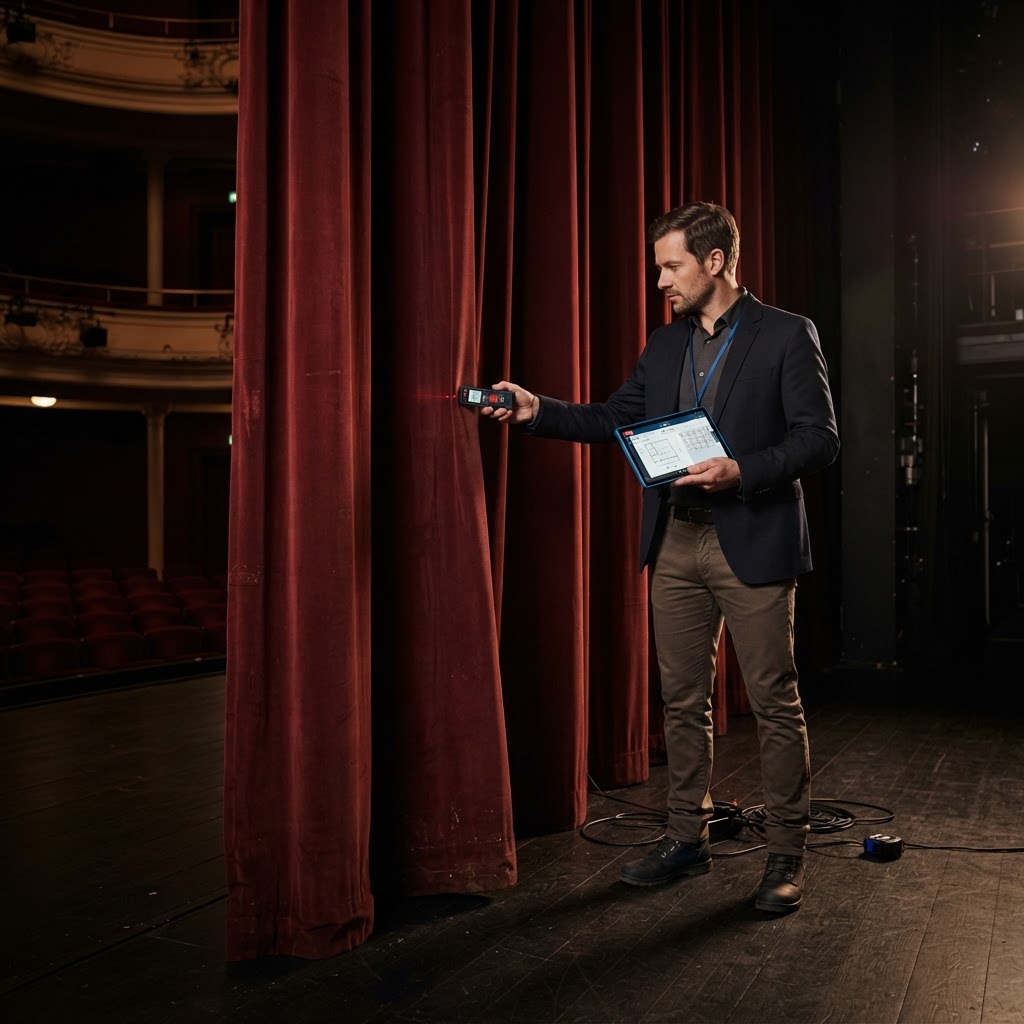
Every year, venues such as nightclubs, theaters, event centers, and hotels face rigorous fire safety inspections. A major component of these audits is verifying that curtains, stage drapes, and decorative fabric installations have been treated with certified fire-retardant chemicals. If these certificates are expired or missing, the venue risks fines, insurance coverage denial, or forced closure.
This creates a recurring, high-demand business opportunity: the Mobile Commercial Textile Flame Retardant Certification Service. You act as the expert who visits sites, inspects the current state of drapery, verifies the chemical treatment history, tests small samples where necessary, and issues digital compliance reports that venues can provide to fire marshals.
Understanding the Market Need
Facility managers and event directors are often overwhelmed by compliance documentation. They may have had curtains treated years ago, but have no way to track when that protection needs to be reapplied. Your service bridges the gap between physical safety requirements and administrative documentation.
By digitizing the intake, inspection, and certification lifecycle, you provide more than just an assessment; you provide peace of mind. You aren't just selling a form; you are selling compliance, risk reduction, and audit-ready records.
How the Business Model Works
-
Initial Audit: You visit the client site to catalog every piece of treated fabric, recording dimensions, material type, and the date of the last treatment.
-
Digital Tagging: Every item is assigned a digital ID. You provide QR code labels for the client to attach to their curtains.
-
Reporting: You generate a professional, branded PDF compliance certificate for each curtain, which includes your inspection notes and verification status.
-
Recurring Revenue: You schedule automatic check-ins every 6 to 12 months. Since fire-retardant efficacy fades over time due to dust, cleaning, and humidity, your service becomes a perpetual renewal cycle.
A Worked Example: The Grand Theater Scenario
Imagine a mid-sized theater with 15 stage curtains. You perform an initial audit and find that the main proscenium curtain was treated three years ago, while the side masking drapes have no record of treatment. You generate a quote for:
-
On-site verification and labeling of the proscenium curtain.
-
A re-application referral or service for the untreated masking drapes.
-
A digital 'Master Compliance Portfolio' for the theater manager. The manager pays a flat fee for the audit and signs an annual 'Compliance Maintenance Agreement' to ensure the theater remains inspection-ready, providing you with a reliable recurring revenue stream.
Build this in AI Form Generator
To build this, configure a new project called 'Textile Fire Safety Auditor'. Include a 'Client Information' section (Name, Venue ID, Contact).
Create an 'Inventory Catalog' section using a repeatable sub-form for each item (Curtain Name, Room Location, Fabric Type, Dimensions).
Add a 'Safety Assessment' section with fields for 'Visual Inspection Status' (Pass/Fail), 'Last Treatment Date', 'Chemical Brand Used', and a photo upload field to document the physical condition.
Include a 'Sign-off' element for both the inspector and the client. Set up an automated task notification to trigger a 'Renewal Reminder' email six months after the last inspection. Ensure the output is a professional, printable 'Fire Safety Compliance Certificate' that captures the site visit details and a summary of the compliant items.
Equipment & Supplies You’ll Need
As an Amazon Associate, AI Form Generator may earn from qualifying purchases.
-
Laser Distance Measurer: Essential for quickly and accurately recording the dimensions of large stage drapes or wall coverings. https://www.amazon.com/s?k=laser+distance+measurer&tag=aiformgen-20
-
Industrial QR Code Label Printer: Used to create durable, heat-resistant labels that attach to fabric to provide a scannable link to the digital certificate. https://www.amazon.com/s?k=label+maker+for+industrial+use&tag=aiformgen-20
-
High-Lumen Rechargeable LED Flashlight: Necessary for inspecting dark theater riggings and examining fabric weave closely. https://www.amazon.com/s?k=high+lumen+rechargeable+flashlight&tag=aiformgen-20
-
Tablet/iPad Rugged Case: Protects your mobile device while you navigate backstages and crawl spaces. https://www.amazon.com/s?k=rugged+tablet+case&tag=aiformgen-20
Numbered Steps to Launch
-
Research Local Codes: Review NFPA 701 (or local equivalent) standards.
-
Build Your Form: Use the AI Form Generator to create your digital audit template.
-
Source Supplies: Acquire your hardware and professional liability insurance.
-
Define Your Pricing: Create a tiered package (e.g., Audit Only vs. Audit + Annual Maintenance).
-
Reach Out: Contact local event venues, schools, and civic centers.
-
Execute: Perform your first audit, document everything, and present the digital results.
Common Mistakes to Avoid
-
Relying on Paper: Hand-written notes are easily lost. Always use a cloud-synced digital platform.
-
Ignoring Fabric Types: Different materials (synthetics vs. cottons) require different chemical treatments. Never assume one solution works for everything.
-
Poor Documentation: Fire marshals demand clear proof. Ensure your photos and certificates include date-stamps and specific ID tags.
-
Overlooking Insurance: Always carry commercial general liability insurance when operating in high-occupancy venues.
Frequently Asked Questions (FAQ)
Q: Do I need a chemical engineering degree?
A: No, you are acting as an auditor and verification specialist. However, you must be well-versed in the fire-safety regulations of your specific municipality.
Q: What happens if a curtain fails the inspection?
A: You report the failure, note it in the digital record, and advise the client on the necessary remedial steps, such as professional cleaning and re-treatment.
Q: How often should curtains be re-certified?
A: Typically, re-certification occurs annually or whenever the fabric undergoes cleaning, which can strip away flame-retardant chemicals.
Q: Is this a national business?
A: While you can scale nationally, focusing on a local or regional radius initially allows you to build stronger relationships with local fire marshals and facility managers.